

News
Saturday, June 21, 2014
Medics warn Uganda on maternal and infant death rates
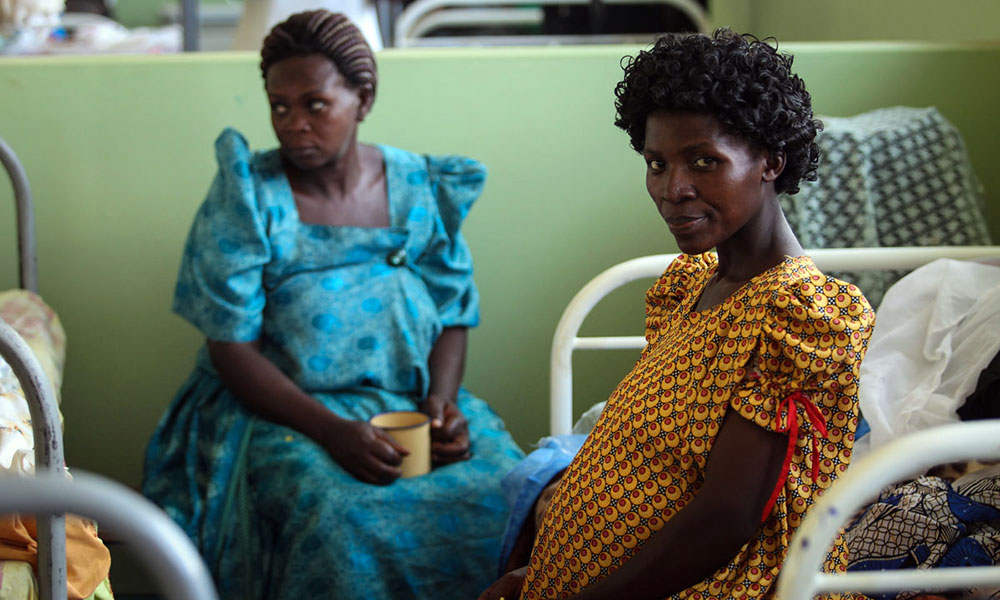
Pregnant women waiting to be attended to in a maternity ward, such mothers need much attention from proffessional midwives.
KAMPALA, Uganda - Maternal and new-born death in the country is expected to increase if Uganda does not address the challenges in the health sector which are compromising the public to Access Quality reproductive health services in the country
Medics say that although the number of women delivering in the health units country wide has improved but pregnant mother are being attended on by under qualified staff like the nursing Assistants who cannot handle emergency complication s during delivery which may lead to the death of both the mother and the new born baby.
Now medics are calling for the recruiting more professional mid wives and Universalization of reproductive health services across the country if the country is meet the millennium development goals targeting the reduction of maternal motility rate
Dr Namala Hanifar Ssegendo the chief of party at save the children Uganda said the quality of reproductive health most expecting mothers and the new born babies in the country are getting especially in the up country districts is still wanting.
“There’s big gap in quality services delivery between urban and the rural areas where poor reproductive services are concentrated as compare to the urban most health units are manned by inefficiency and under qualified staffs like Nursing Assistants who cannot handle emergency reproductive complications , Government should come up with interventions to solve such imbalances in health services delivery” she explained.
Namara made the comments during the Symposium on maternal and New born health organised by Makerere University Scholl of public health(MUSPH) in Kampala.
The objective of the symposium was to assess how the different community interventions such as community cooperatives savings, community insurance scheme can improves maternal health services delivery in the remote parts of the country, The medics also used the meeting to assess the positive impacts which the schools programmes like Maternal and Neonatal Implementation for Equitable Systems (MANIFEST), how it has helped in improving on the access to quality reproductive health services in most parts of the country where the programme is being implemented
MANIFEST programme is being implemented in Districts of Kamuli , Pallisa and Kibuku all in eastern respectively, According to the programme implementers, The programme has enabled the participating Districts to improve on maternal and new born health services Delivery
Dr Ahmed Bumba the Kibuuku District( about 179kilometers from Kampala city on the Eastern Uganda route ) Health officer said with the support of MUSPH the district has registered an improvement of 46% services delivery in offering maternal and new borne health service as compare to the 36% which the district was at before the MANIFEST programme was introduced.
Bumba Explained that MANIFEST programme has supported the health department in the district to carry out community education about maternal and new born health according to him this has changed people’s minds sets especially the men towards accompanying their wives to health units for the Antenatal check ups
“Pregnant mother going for the ANC has gone up to about 48% this is good because it helps to save the lives of the unborn baby because when the pregnant mother come for the ANC with their Husbands they are also subjected to HIV test when we discover that their HIV positive then we enrol the mother to HIV related programmes that aimed at preventing the mother to child transmission of the HIV virus to the unborn baby “He said
In the symposium, Medics advised Government to come up with community based innovations such as community health insurance schemes, Using transport vouchers system to easier the transportation of expecting mother to health Units, Presenting paper on save the mothers project(emergency communication and transport ) Dr Jolly Beyeza senior Gynaecologist said communities need to pool resources together and set up an emergency transport system which they can use in case pregnant lady experiences labor pain .
“One of the challenge most women in the rural areas are facing is the problem of transport most parts are not accessible due to poor infrastructure but if the communities pool out resources in one pool they can sign memorandum of understanding with private transport company or motor cyclists (Boda boda) which will be offering such services to the community instead of relying on Government Ambulances” she suggested.
Beyeza observed that the emergency transport system managed by the community has saved many lives in most parts of the country where it has been implemented especially in the central District of Kiboga (127.03kilometers from Kampala) she said before the introduction of such an initiative the District had the high maternal mortality rate but now the situation has been improved after the Association of Obstetricians and Gynaecologists of Uganda introduced the initiative in the district about five years ago.
According to the information available at the Ugandans population secretariat, Uganda’s maternal mortality rate is now 438 mothers per 100,000 live births - higher than the 2006 rate of 435, these send bad signals on the chances for Uganda to achieving Millennium Development Goal 5 (MDG 5) of the United Nations (UN).
The MDGs are international development goals set by the UN in 2000; MDG 5 aims to reduce maternal mortality to a quarter of 1990 levels by the target date of 2015. Uganda has a target of 131 deaths per 100,000.
On community health insurance scheme, Reproductive health experts say that if the scheme is implemented this can enable pregnant mothers to Access Quality reproductive health serves from both the private sector and Government Hospitals
Dr Nakiwala Stella Regina of the Health partners Uganda told the East African BusinessWeek that “There many private clinics and hospitals which can offer quality reproductive health services in the country however most of these institutions are expensive the only way to get such services is through women’s in the communities forming cooperatives whose members can be insured this can help them to get quality reproductive health services from the private sector” she explained.
By Samuel Nabwiiso, Saturday, June 21st, 2014