

EAC
Sunday, February 16, 2014
Serengeti issue in EAC court
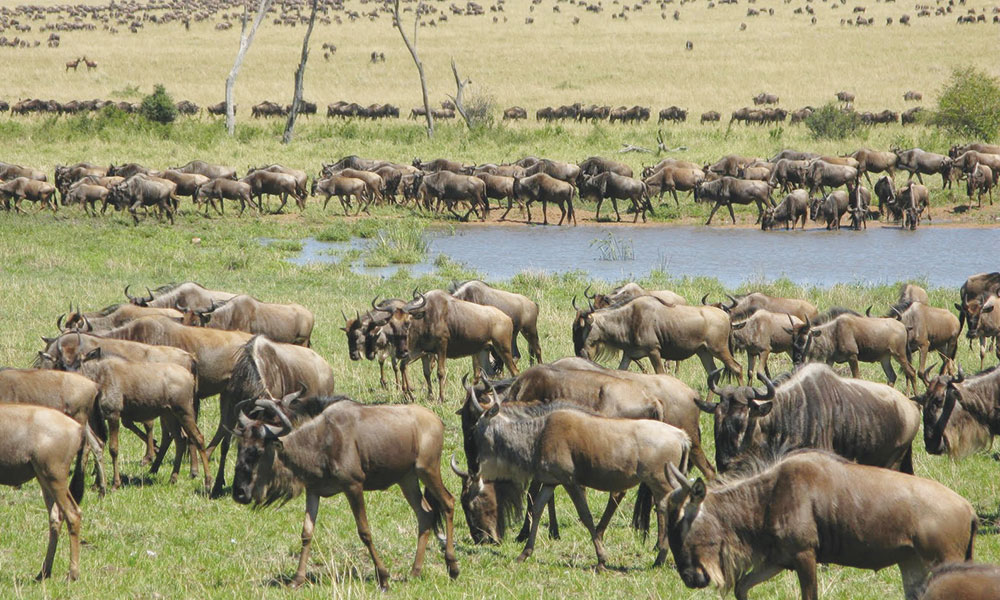
CONTENTIOUS: According to the Frankfurt Zoological Society, the planned road would result in the decline of wildebeests from the current 1.3 million to around 200,000.
ARUSHA, Tanzania - A case filed by the Kenyan based Africa Network for Animal Welfare (ANAW) contesting Tanzania’s proposal to build a ‘super highway’ across the Serengeti National Park, is likely to be thrown out.
This is because of the absence of the ratification of the Protocol on Environment and Natural Resources by the five Partner States.
Plans by the Tanzanian government to build a road through the Serengeti National Park have elicited widespread protests from wildlife activists and several quarters in the tourism industry.
Counsel for Tanzania, Gabriel Malata, a Principal State Attorney, submitted at the East African Court of Justice in Arusha last week that, there was no violation of the Treaty, because the government had at the time the case was filed, not decided on which road to construct (whether tarmac or gravel).
Secondly, after a feasibility study on impact assessment report, it was decided to construct a gravel road for tourism and administrative purposes and that the same would have no effect on the eco-system at Serengeti.
According to a statement issued by the EACJ, Malata added that the orders sought by the Applicant if granted, will frustrate the tourism sector in the entire East Africa citing that the road is there to facilitate the movement of tourists.
He therefore asked the Court to dismiss the case with costs as against the United Republic of Tanzania.
However the ANAW lawyer, Saitabao Kanchory Mbalelo, said the action of constructing the road across the national park is unlawful and infringes Articles 5 3 (c), 8 1 (c), 112 1 (e), 114 1 (a) of the Treaty for the establishment of the East African Community.
He added that the road will create a negative impact which will adversely affect the eco-system and the environment and that the Court has jurisdiction to entertain the dispute.
He argued that the road will be a potential threat to wildlife as it will interrupt their movements and migration.
Saitabao said the five kilometre road is gravel level and not open yet. But the Respondent (United Republic of Tanzania) intends to open it for public use.
He submitted that, however the initial intention of the Government of Tanzania was to construct a tarmaced road, but later changed to gravel and that might cause the same effect in the National Park environment.
He therefore asked the Court to be pleased to find that the Government of Tanzania contravened the Treaty for the establishment of the EAC by the above actions.
Counsels appeared before The Principal Judge Hon. Mr. Justice Jean Bosco Butasi, The Deputy Principal Judge Hon, Mr. Justice Isaac Lenaola and Hon. Mr. Justice John Mkwawa in open Court.
The proposed highway is seen as a major threat to the Masai Mara National Reserve and Serengeti ecosystems as it would seriously affect the annual wildebeest migration, a major revenue earner for both countries.
According to the Frankfurt Zoological Society, the planned road would result in the decline of wildebeests from the current 1.3 million to around 200,000. It also warns that increasing traffic into the Serengeti National Park and easier access would see a rise in poaching by criminal syndicates.
Tanzania has been urged to consider building the road elsewhere so as to avoid adversely affecting the Serengeti and Masai Mara ecosystems.
While it is crucial for the Tanzanian government to link various parts of the country, it should consider calls to build the road between Arusha and Musoma outside the park.
By Elisha Mayallah, Sunday, February 16th, 2014