

Agri-Business
Sunday, April 13, 2014
Lower agriculture spending raises risks
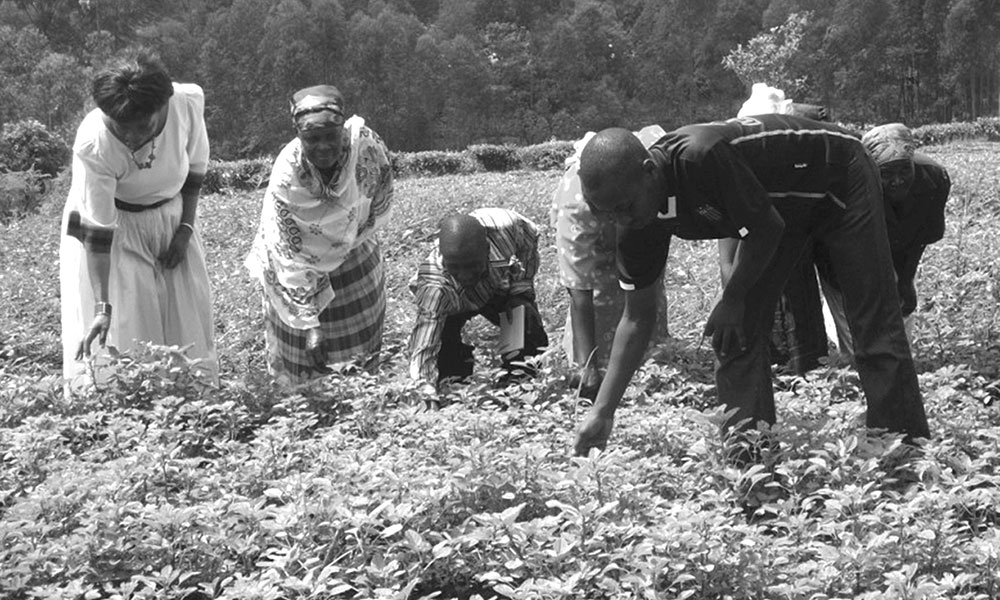
SUPPORT: All over Africa, it is NGOs that are offering small farmers the technical services that governments are unable provide.
KAMPALA, Uganda - The World Bank has asked African governments to increase financial resources to agriculture if they want to overcome income inequalities and higher food prices.
In its latest Africa Pulse report, the bank said agriculture production is on the decline due to decreasing investment in the sector by African governments
“Although other sectors like mining, tourism are doing well in the continent agriculture production in Africa is declining. This is a very serious social challenge which African states should address urgently if they want to eliminate poverty especially among the rural citizens across Africa,” Francisco Ferreira, the Chief Economist for Africa at the World Bank Headquarter in New York, said.
Ferraira said most African countries have the potential of fighting poverty through the agriculture sector because of good climatic conditions. However less support has been given to farmers, especially small holders who contribute the greatest percentage in the sector. He said this is responsible for the decline in yields and food price volatility
“Local price pressure have emerged in number of countries driven in part by large currency depreciation especially in Ghana and Zambia and also by unfavourable weather conditions in Francophone West Africa drought in 2013 resulted in crop losses of up to 50% in some parts of the Sahel region. Large currency depreciation and lower harvests due to intensifying drought conditions could hurt poor buyers and result into higher inflation,” he said.
Due to the decline in food production in most African countries, inflation has risen due to high food prices, and often limited supplies.
The situation has been worsened by prolonged drought seasons leading to drying up crops.
The report suggests that increasing integration with larger regional markets can reduce the magnitude of the price effects from localized shocks while lower trade barriers and better trade infrastructure would allow faster and more efficient response to localized food shortages due to disaster of all types
On trade as tool to promote agricultural production the report states that the majority countries in the continent should promote trade in agricultural technology. The best way to do this is by importing inputs such as improved crop varieties, fertilizers agricultural machinery and animal vaccines
‘When local farmer have access to improved and modern agriculture hardware’s like tractors this would pave the way for more intensive production system with increased productivity and greater sustainability in addition facilitation of trade in crops , livestock and inputs brings the prospect of significant number of new jobs in these regions where unemployment is high,” the report states.
However Mrs. Rachael Ssebudde the senior Economist at the World Bank offices in Uganda told East African Business Week the report is good but it’s focusing on policy-makers leaving out other factors like high population growth in most parts of Africa
“Agriculture production is declining not because of less support, but also due to factors like the high population growth. This has reduced the acreage area for agriculture production and also increasing food consumption thus reducing on the volume for exporting. That is why most people are not earning much from the sector,” she said
Agriculture is seen as the economic backbone for most African states, especially those less endowed with natural resources. However the sector is not performing at maximum capacity to spur economic development due to declining productivity as result of less interventions by governments.
Many farmers in Africa have not been supported by their governments especially when it comes to accessing cheap capital from financial institutions. This has kept many farmers operating on small holder farming scale, because they cannot raise capital to invest in acquiring modern farming equipment’s like tractors, fertilizers improved seed varieties on the market that are resistant to droughts and the various pests and diseases.
Most farmers (small scale farmers) in Africa are now being supported by non-government organisations (NGOs) operating in several areas of agriculture. However in 2014 international financial institutions like the World Bank and Japan International cooperation Agency (JICA) have started supporting some African countries with grants.
JICA towards the beginning of April , 2014 signed a $$3,696,858 grant for the agriculture development in Tanzania. This will see the country increasing food production especially cereals and legumes from 104% to 120% by 2015 and it will also support the production of high value crops and raise average agricultural annual growth by at least 6%.
In Rwanda the World Bank this year has granted the Kigali government $60.9 million to fund the development of feeder roads. Some of the money will also fund the third rural sector support, all such initiatives geared at supporting agriculture development in the sub-Saharan regions
During the Second Ordinary Assembly of the African Union in July 2003 in Maputo (Mozambique) African Heads of State and Government endorsed the ‘Maputo Declaration on Agriculture and Food Security in Africa’.
The Declaration contained several important decisions regarding agriculture, but prominent among them was the ‘commitment to the allocation of at least 10 percent of national budgetary resources to agriculture and rural development policy implementation within five years’.
But to date no single country in Africa has implemented the protocol.
By Samuel Nabwiiso, Sunday, April 13th, 2014